


 PLATFORM UPDATE:


ZnO-Fe-N/C bimetallic electrocatalysts with antibacterial activity for durable oxygen reduction in microbial fuel cells
 *a
*a
Abstract
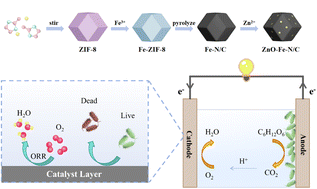
Improving the oxygen reduction reaction (ORR) at the cathode and mitigating biofouling are key to advancing microbial fuel cell (MFC) performance. This study aims to develop a multifunctional cathode catalyst capable of simultaneously promoting ORR activity and suppressing biofilm formation. A dual-metal ZnO-F-N/C electrocatalyst was synthesized via a controlled pyrolysis strategy, enabling the integration of Fe-Nx active sites with antibacterial ZnO components. The optimized ZnO-Fe-N/C-1 exhibits a high half-wave potential of 0.70 V vs. RHE and sustained activity in neutral electrolyte. When deployed as an air cathode in an MFC, ZnO-Fe-N/C-1 achieves a maximum power density of 643.5 ± 23.0 mW m−2 (J = 1355.7 ± 24.3 mA m−2), exceeding those of Fe-N/C and commercial 20 wt% Pt/C benchmarks. During wastewater treatment tests, the MFC demonstrates a chemical oxygen demand (COD) removal efficiency of 94.70 ± 0.86% and a coulombic efficiency of 17.95 ± 0.15%. Furthermore, the intrinsic biofouling-resistant nature of ZnO-F-N/C-1 stabilizes long-term MFC operation. This study demonstrates a sustainable catalyst design that integrates high ORR efficiency with durability and biofilm control, offering a promising route toward robust, high-performance MFC systems.
 Please wait while we load your content...


