


Synergistic interface design of Al2O3-coated NMC811 and graphitic-based pre-lithiated anodes for enhanced full-cell performance

Abstract
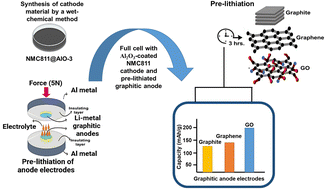
This study investigated aluminum oxide (Al2O3) surface coatings on lithium nickel manganese cobalt oxide (NMC811) cathodes using a wet chemical process based on ethanol-dissolved aluminum ethoxide (Al(OEt)3). Three coating concentrations, 1, 2, and 3 wt% Al precursor relative to the NMC811 mass, were synthesized and referred to as NMC811@AlO-1, NMC811@AlO-2, and NMC811@AlO-3, respectively. The workflow encompassed structural and surface characterizations of the coated samples, followed by electrochemical evaluation in half- and full-cell configurations. FTIR confirmed Al–O bond formation, while XRD and Raman spectroscopy verified that the NMC811 lattice structure remained unchanged after coating. Furthermore, transmission electron microscopy (TEM) and energy-dispersive X-ray spectroscopy (TEM-EDX) confirmed the successful deposition of the Al2O3 layer. Time-of-flight secondary ion mass spectrometry (ToF-SIMS) analysis revealed Al3+ ion diffusion into the grain interiors, indicating a potential impact on the electrochemical performance of the electrodes. Electrochemical tests showed that all the coated samples exhibited improved stability, with NMC811@AlO-3 (3 wt% coating) achieving the best capacity retention in half cells. In the second phase, full cells were formed using pre-lithiated graphite, graphene, and graphene oxide (GO) anodes, for which pre-lithiation conditions were optimized. Among all combinations, the NMC811@AlO-3/GO full cell demonstrated the highest initial discharge capacity (183 mAh g−1) and the best cycling retention (80.1% after 250 cycles at C/2). These results suggest that a 3 wt% Al2O3 coating, combined with a GO anode, provides the most promising pathway toward high-performance full-cell systems.
 Please wait while we load your content...


