


 PLATFORM UPDATE:


Insights into the mechanism of electrode degradation and performance enhancing strategies for iron-ion batteries using X-ray absorption spectroscopy

Abstract
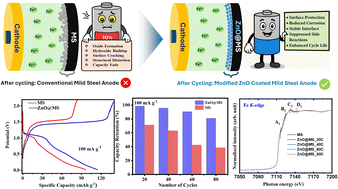
Rechargeable iron-ion (Fe-ion) batteries are gaining attention due to their unique characteristics, including earth abundance, cost-effectiveness, eco-friendly nature, and high electrochemical performance. However, capacity degradation during cycling hinders their effective use. To investigate the material's degradation in rechargeable Fe-ion batteries, two different coin cells are fabricated utilizing mild steel (MS) and ZnO-coated mild steel (ZnO@MS) as anodes. In both cases, V2O5 is used as the cathode, along with a non-aqueous electrolyte. Cyclic voltammetry and galvanostatic charge–discharge analyses are conducted at different cycling stages, viz. 20, 40, 60, and 80 cycles, for determining the electrochemical performance of these anode-based coin cell batteries. The coin cells are dismantled after cycling, and the post-cycled electrodes are subjected to ex situ scanning electron microscopy, X-ray diffraction, and X-ray absorption near edge structure (XANES) and extended X-ray absorption fine structure (EXAFS) measurements to probe the structural and chemical degradation mechanisms of the electrode materials. The results from the XANES and EXAFS measurements provide critical insights into the evolution of the electronic structure and local atomic environment, revealing degradation trends correlated with the cycling performance. The comparison between the MS and ZnO@MS anodes highlights the protective role of ZnO coating in mitigating degradation. In both cases, the V2O5 cathode exhibits significant transformation after cycling, possibly due to changes in the oxidation states due to the insertion of Fe ions in the cathode. Thus, these findings offer a deeper understanding of the stability of materials in Fe-ion batteries and anode modification possibilities, which are crucial for developing durable, cost-effective energy storage systems.
 Please wait while we load your content...


