


 PLATFORM UPDATE:


Impact of background systems on carbon capture and utilization pathways to produce fuels/chemicals in Canada

Abstract
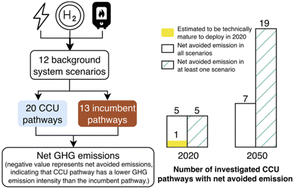
Carbon capture and utilization (CCU) to produce fuels and chemicals is a promising strategy to reduce greenhouse gas (GHG) emissions. However, net GHG emissions depend heavily on required electricity, hydrogen, and heat, collectively known as background system inputs. We model the cradle-to-gate GHG emissions for 13 chemicals and fuels produced through 20 CCU pathways (8 at or beyond demonstration scale [e.g., methanol from hydrogenation], 5 under lab-scale development [e.g., formic acid from electrochemical reduction], and 7 at research phase [e.g., methane from photocatalytic reaction]), using 12 background system scenarios for Canada from 2020–2050. The CCU chemicals and fuels are compared against the dominant incumbent pathways with the same harmonized background system. Results show that GHG emissions intensities for most of the CCU pathways vary substantially with the background system, with the GHG intensity of electricity being the most impactful factor followed by variation in provision of hydrogen and heat. While low GHG intensity electricity is crucial, it does not guarantee the CCU pathways will have lower GHG intensity than incumbents. Most incumbent pathways are also sensitive to background system changes, thus using fixed values to represent the emissions intensities of incumbent pathways is insufficient. Out of the 20 CCU pathways, 5 have the potential for lower emissions intensity than incumbents in all 2020 scenarios, but only one is currently technically mature and could be deployed at demonstration scale.
- This article is part of the themed collections: Sustainable Energy & Fuels Recent HOT Articles and Recent Open Access Articles
 Please wait while we load your content...


