


 PLATFORM UPDATE:


ICT-driven Ag+ detection using xylene-spacer integrated naphthalene probes as fluorescent chemosensors: selectivity, practical monitoring, and anticounterfeiting

Abstract
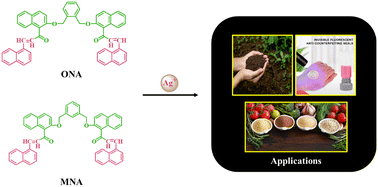
Two xylene-linked naphthalene-based fluorescent probes, ONA and MNA, were designed, synthesized and fully characterized by NMR and mass spectrometry for the selective detection of Ag+ ions. In a MeOH : H2O (1 : 1, v/v) medium at physiological pH (7.3), both probes exhibited pronounced selectivity and high sensitivity toward Ag+. The sensing response arises from a synergistic mechanism involving restriction of C–O bond rotation, suppression of the intramolecular charge transfer (ICT) process, and chelation-induced complex stabilization, leading to enhanced fluorescence accompanied by a hypsochromic shift. Quantitative evaluation through quantum yield measurements, limits of detection, and binding constant analysis confirmed efficient Ag+ recognition. The practical applicability of the probes was validated through successful detection in real samples, including millets, vegetables, ointments, and soils, as well as bacterial imaging in E. coli and anticounterfeiting stamping applications. These results establish ONA and MNA as versatile and multifunctional fluorescent chemosensors for Ag+ detection.
 Please wait while we load your content...


