


 PLATFORM UPDATE:


Adapting antibody–invertase fusion protein immunoassays to multiwell plates for infectious disease antibody quantification

Abstract
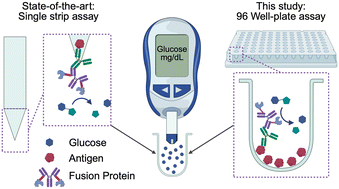
Traditional enzyme-linked immunosorbent assays (ELISAs) rely on horseradish peroxidase (HRP)-conjugated antibodies to generate a colorimetric response proportional to target antibody concentration. However, spectrophotometric quantification requires expensive benchtop equipment, limiting its usability for frequent, population-scale immunity screening. To overcome this barrier, we previously developed LC15, an antibody–invertase fusion protein that catalyzes sucrose-to-glucose conversion in proportion to antibody levels. This fusion protein enabled antibody quantification using handheld glucometers – affordable, widely available devices already integrated with telehealth infrastructure. Unlike commercial ELISAs, which report relative antibody titers, LC15 facilitates absolute antibody quantification (μg mL−1), enhancing applications such as epidemiological monitoring and convalescent plasma dosing. To increase the number of clinical samples processed in a single run of the assay, in this study we transitioned from poly(methyl methacrylate) strips to microwell plates, optimizing pH conditions and reagent concentrations. This adaptation yielded similar sensitivity to the original strip-based assay, but with a 5-fold reduction in reagent consumption and in plasma, as opposed to serum used for the previous study. Using the SARS-CoV-2 receptor binding domain (RBD) as the antigen, we applied LC15 in a 96-well plate format to screen 72 clinical samples in triplicate for anti-RBD antibodies. A blinded comparison with commercial ELISAs demonstrated strong linear correlation (R2 = 0.85) over four orders of magnitude in concentration. By combining accuracy with accessibility, this approach has the potential to facilitate population-level immunity assessments, supporting rapid public health responses in future outbreaks.
 Please wait while we load your content...


