


 PLATFORM UPDATE:

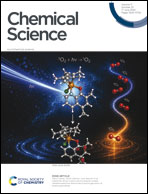
Mechanism of the Palladium-Catalyzed Diazenylation of Aryl Electrophiles: Carbonate-Facilitated Transmetalation and Ligand-Dependent Selectivity
Abstract
A quantum-chemical investigation of the palladium-catalyzed cross-coupling of silylated diazenes as diazenyl anion equivalents and aryl electrophiles is reported. The selectivity, that is azobenzene formation by diazenylation versus biaryl formation by denitrogenative coupling, is largely controlled by the diphosphine ligand employed, with dppf suppressing any loss of dinitrogen. This experimental observation is further corroborated by a screening of representative ligands. The key role of the base additive is also clarified by density functional theory calculations. These reveal an unusual two-step transmetalation process characterized by a barrierless desilylation event facilitated by a silaphilic carbonate base. From this, a full mechanistic picture of a rare C(sp2)−N(sp2) cross-coupling reaction emerges.
 Please wait while we load your content...


