


 PLATFORM UPDATE:


Engineering a redox-active interface for highly reversible aluminum anode-based practical all-solid-state lithium batteries with ultralow N/P ratio

Abstract
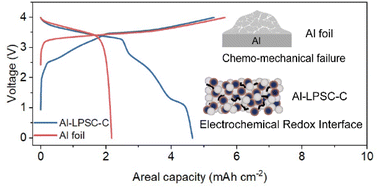
Aluminum is a promising anode for all-solid-state lithium batteries (ASSLBs) owing to its high theoretical capacity (900 mAh g−1) and optimal lithiation potential. However, its practical viability with critical N/P ratio and high current density is plagued by mechanochemical failure, sluggish kinetics, and extremely low reversibility. Herein, we construct a redox-active interface (comprising Li2S, LixP, etc.) on the Al anode via the electrochemical activation of a Li5.4PS4.4Cl1.6 sulfide electrolyte. This interphase concurrently accelerates Li+ transport and fortifies interfacial stability. Theoretical modeling establishes the Li+ binding energy difference (ΔE) as a critical descriptor for interfacial stability; a substantial ΔE strongly confines Li+ within the anode bulk, effectively preventing parasitic ion migration and interfacial degradation. Consequently, the engineered Al anode delivers near-theoretical capacity and exceptional reversibility. Strikingly, the ASSLBs sustain over 1000 cycles under practically demanding conditions: a low N/P ratio of ∼1.05, a high-loading cathode (30 mg cm−2), and a high current density of 7 mA cm−2, setting a new benchmark for practical operations. Coupled with the ultra-low cost of Al powder (3.77 USD per kg), this redox-interface strategy unlocks a highly viable pathway for cost-effective, high-energy-density ASSLBs.
 Please wait while we load your content...


