


 PLATFORM UPDATE:

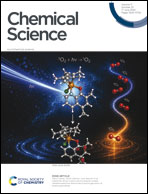
Enhanced and Selective Oxygen Reduction by Iron porphyrin with a Biguanidine Residue in the Second Coordination Sphere
Abstract
The role of 2nd sphere residues in catalytic processes that require multiple-protons and multiple-electrons is a growing area of interest. These 2nd sphere effects manifest through hydrogen bonding, proton transfer and electrostatic interactions resulting in very selective catalysis. Here a biguanide functional group, which can form very strong hydrogen bonding with several water molecules, is installed in the 2nd sphere of an iron porphyrin. The resulting porphyrin, Fe-biguanide, is found to reduce O2 selectively, by 4e-/4H+, to H2O in both aqueous, where the biguanide is protonated, and organic medium, where it is neutral, with rates much faster than any porphyrin reported till date. The presence of hydrogen bonding with water molecules in the 2nd sphere is confirmed using several spectroscopic techniques. These results indicate that water molecules, held by 2nd sphere residues, can accelerate the kinetics of 4e-/4H+ reduction of O2as well as any other functional group.
 Please wait while we load your content...


