


 PLATFORM UPDATE:

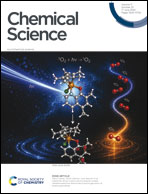
Unraveling emission narrowing pathways in N-embedded polyaromatic systems via sequential π-interlocking for efficient electroluminescence

Abstract
The growing demand for complex B-free, narrowband organic emitters has garnered significant attention for OLEDs, but preparing them remains challenging due to limited control over vibronic coupling and structural relaxation. Herein, we present a streamlined molecular design strategy based on sequential π-interlocking to regulate the emission bandwidth in N-embedded polyaromatic hydrocarbons (N-PAHs). A library of emitters (CzTPA, CzCz, CzICz, and ICzICz), each containing two N-atoms and six phenyl rings, was constructed with progressively increasing degrees of π-interlocking from mono-to four-fold fused architectures. Combined photophysical and density functional theory studies reveal that stepwise π-interlocking significantly rigidifies molecular geometry, suppresses vibronic coupling, and minimizes structural relaxation. Consequently, the emission bandwidth gradually narrows across the series, leading to a significant shift from 58 to 24 nm in FWHM from mono-fused CzTPA to four-fold fused ICzICz, accompanied by a blue-shifted emission. Notably, each π-interlocking contributes to an ∼9–14 nm narrowing of the FWHM. The ICzICz exhibits the lowest reorganization energy, a narrow FWHM of ∼24 nm, and a high PLQY of ∼92%. OLEDs based on ICzICz deliver pure ultra-violet emission with an EQE of 4.2% and CIEy of ∼0.029. As a host for the green phosphor, the device achieves an EQE of ∼18.5% with an extremely low roll-off (∼1%) at 3000 cd m−2. This work establishes a general molecular design tool-kit for producing efficient B-free narrowband organic emitters for OLEDs.

 Please wait while we load your content...


