


 PLATFORM UPDATE:

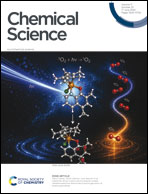
Solid-solution surface alloying of Cu nanocubes with platinum-group metals: pathway switching and catalyst stabilization in CO2 reduction
 *a
Akihiko
Anzai,
†b
Masaki
Donoshita,
b
Takeharu
Sugiyama,
g
Hiroyuki
Setoyama,
h
Tetsuroh
Shirasawa,
i
Takayoshi
Ishimoto
j
and
Miho
Yamauchi
*abckl
*a
Akihiko
Anzai,
†b
Masaki
Donoshita,
b
Takeharu
Sugiyama,
g
Hiroyuki
Setoyama,
h
Tetsuroh
Shirasawa,
i
Takayoshi
Ishimoto
j
and
Miho
Yamauchi
*abckl
Abstract
Precise control over morphology and alloy configuration is essential for addressing complex reactions, such as the electrochemical CO2 reduction reaction (CO2RR), which proceeds through multiple intermediates and requires enhanced selectivity, activity and stability. However, achieving simultaneous regulation of these two structural features remains a formidable challenge. Here we report novel shape-controlled Cu-based solid-solution surface-alloy nanocrystals composed of Cu nanocube (NC) cores surrounded by atomically alloyed platinum-group metal shells (Cu/Cu1−xMx NCs, M = Pd, Pt, Ir, Ru) that alter CO2RR performance of Cu. In particular, surface alloying of Cu NCs with Ir switched product selectivity from C2H4 to HCOOH. Cu/Cu1−xIrx NCs exhibited superior HCOOH activity and stability compared with a Sn catalyst, which is a well-known element for producing HCOOH. Furthermore, Ir surface alloying preserved the cubic morphology of Cu NCs, whereas pure Cu degraded into nanograins. Our findings highlight a valuable approach to controlling reaction pathways through heteroatom interfaces and to designing highly active and stable electrocatalysts.

- This article is part of the themed collection: 2026 Chemical Science HOT Article Collection
 Please wait while we load your content...


