


 PLATFORM UPDATE:

Synergistic mechanisms of metal-based supports in Ru-based HER catalysts: from dimensional perspective to metal–support interaction engineering
 *a
*a
Abstract
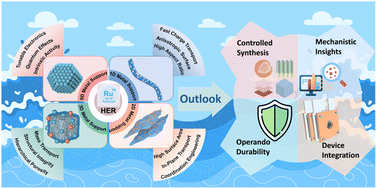
The transition to a sustainable energy system requires efficient renewable energy conversion and storage technologies. Green hydrogen produced through water electrolysis offers a promising solution for storing intermittent renewable energy as a clean chemical fuel. The core of this technology is the hydrogen evolution reaction (HER), the efficiency of which fundamentally depends on the design of the catalyst that promotes it. In recent years, supported metal-based catalysts have garnered significant attention due to their unique electronic structures and synergistic catalytic effects. This review summarizes the research progress on metal-based support-loaded Ru-based catalysts for the HER, beginning with an examination of the intrinsic characteristics of these metal-based supports. Importantly, this review systematically categorizes representative metal-based support materials according to their dimensionality (0D, 1D, 2D, and 3D) and provides an in-depth discussion on the regulatory mechanisms of metal–support interactions (MSI) influenced by supports of different dimensions—a unique perspective that distinguishes this work from existing reviews. Finally, the challenges and future development directions for metal-based support-loaded catalysts in HER applications are thoroughly discussed. This review aims to provide theoretical guidance for designing next-generation high-performance HER electrocatalysts for sustainable energy applications.
- This article is part of the themed collection: 2026 Chemical Science Perspective & Review Collection
 Please wait while we load your content...


