


 PLATFORM UPDATE:

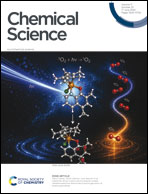
Strong Interactions between Carbones and Halogen Atomic Centers
Abstract
Carbone compounds are characterized by a zero oxidation state on divalent C, which contains two lone, coupled with dative bonding to its two substituents. The ability of this carbone center to act as an electron donor is examined by pairing it with 29 different halogen-containing Lewis acids. DFT calculations show the binding to be quite strong, eclipsing that of a NH3 Lewis base, despite the similarity of their electrostatic potentials. Binding energies span a wide range from nearly zero up to more than 40 kcal/mol; interaction energies are even larger. The more weakly bound dyads, with binding energies below 20 kcal/mol, have all the characteristics of conventional halogen bonds, including an increase in binding energy in the usual Cl < Br < I sequence. For the more powerful Lewis acids, there is a progressively larger degree of displacement of the halogen atom from the Lewis acid to the carbone center, some essentially fully transferred. The dependence of the energetics on the halogen atom reverses for these complexes: Cl > Br > I.
 Please wait while we load your content...


