


 PLATFORM UPDATE:

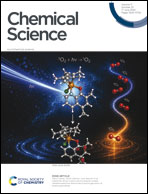
Lucigenin: a strongly oxidizing dicationic photocatalyst for the direct azolation of arenes

Abstract
The direct oxidative C–H amination of arenes has become an attractive method to bypass the classical multistep and sequential synthesis of arylamines. Most current approaches rely on photocatalysis, using strong photooxidants to generate an arene radical cation in situ, which can then be trapped by a nitrogen nucleophile. In this regard, the development of new photocatalysts capable of accessing oxidation potentials greater than +2.5 V has been a thriving field of research in recent years. Here, we report the use of commercially available Lucigenin—widely used as a fluorescent probe in biology—to achieve this transformation. This strategy features short reaction times, a wide azole scope, and avoids the use of additives or fluorinated solvents, a common limitation of many previous methodologies. Preliminary mechanistic studies are also described, suggesting that the initial formation of an azole radical cation could be involved.

- This article is part of the themed collection: 2026 Chemical Science HOT Article Collection
 Please wait while we load your content...


