


 PLATFORM UPDATE:

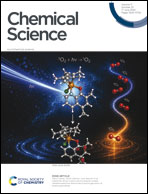
De novo design of NIR-II thioxanthene dye and phosphate-driven charge transfer-coupled J-aggregates for high resolution tumor angiography and type I phototherapy against hypoxic tumors

Abstract
Regulating the photophysical properties of NIR-II dyes via atomic engineering to inhibit type II reactive oxygen species (ROS, 1O2) generation and only generate type I ROS (O2˙− and ˙OH), and modulating dye aggregation for fabricating charge transfer (CT)-coupled J-aggregates (JCT-aggregates) to amplify O2˙− and ˙OH yield remain major challenges with rare reports. Herein, we de novo designed a NIR-II thioxanthene dye SOH. The heavy atom effect of sulfur and the twisted conjugated skeleton strengthened spin–orbit coupling (SOC) by 9.3-fold and intersystem crossing (ISC) efficiency by 86.5-fold and reduced the lowest triplet excited state (T1) energy level to 0.959 eV, completely inhibiting 1O2 generation while only initiating O2˙− and ˙OH production, with a photothermal conversion efficiency (PCE) of 42.3%. Furthermore, electrostatic interactions between phosphates (HPO42−) and the positively charged skeleton of SOH drove the formation of JCT-aggregates (P-SOH NPs), leading to a prominent redshift (beyond 350 nm) of absorption/emission to 1120/1134 nm, 36.1-fold fluorescence enhancement, 59.0-fold increased type I ROS yield, and PCE elevated to 51.1%. P-SOH NPs achieved NIR-II high-resolution tumor angiography (fluorescence resolution: 0.34 mm, signal-to-background ratio (SBR) = 4.56; photoacoustic resolution: 0.11 mm, SBR = 17.2). The type I phototherapy of P-SOH NPs maintained high tumor cell killing efficiency even in hypoxia, achieving complete tumor ablation.

 Please wait while we load your content...


