


 PLATFORM UPDATE:

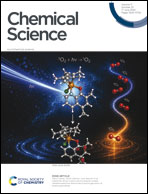
Synchronizing O2 adsorption and proton-coupled electron transfer in carboxylated quinoline-linked covalent organic frameworks to boost photocatalytic H2O2 production

Abstract
Covalent organic frameworks (COFs) have great potential for photocatalytic H2O2 production, but they are frequently limited by the incompatibility between the thermodynamic O2 adsorption and the kinetic proton-coupled electron transfer (PCET). The precise design and facile construction of a coordinated microenvironment that integrates “strong O2 adsorption-rapid PCET” in a single COF remains a great challenge. Herein, for the first time, we developed a de novo construction strategy and successfully synthesized a carboxylated quinoline-linked QL-TTB-COF. The quinoline rings reshape the local electronic structure at the active dipyridyl N sites, significantly strengthening Yeager-type side adsorption of O2 and sharply boosting H2O2 production via one-step 2e− oxygen reduction reaction. Meanwhile, the introduced –COOH not only improves the hydrophilicity of the pore channels but also serves as the proton reservoir, accelerating the overall reaction kinetics by establishing proton transfer networks. In particular, the dipyridyl and –COOH trigger the 4e− water oxidation reaction, offering additional O2 and protons for H2O2 production. Benefiting from the synergistic “strong O2 adsorption-rapid PCET” mechanism, QL-TTB-COF achieves a remarkable H2O2 yield rate of 7848 µmol g−1 h−1, and it ranks among the highest levels of the COF-based photocatalysts. This work highlights the significance of precisely controlling the thermodynamic O2 adsorption and the kinetic proton transfer at the molecular level of the COF-based photocatalysts for H2O2 production.

 Please wait while we load your content...


