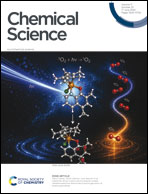
Engineering Covalent Organic Frameworks for Decoupled Photocatalytic and Dark Photocatalytic Synthesis of H2O2

Abstract

Mimicking both the photo reaction and dark reaction units in the natural photosynthetic system offers a sustainable approach for the efficient capture and storage of solar energy. Here we demonstrate that an engineered quinoline-linked covalent organic framework (Py-1Q) can integrate electron transport and storage within a single material. Under visible light illumination, Py-1Q exhibits a H2O2 production rate of 1535 μmol g–1 h–1, 8.5 times higher than that of its imine counterpart. Moreover, part of the photo energy was stored in Py-1Q as free electrons during irradiation, which can be gradually released in the dark to further produce 95 μmol g–1 h–1 of H2O2. DFT calculations reveal that the enhanced delocalization of the lowest unoccupied molecular orbital of Py-1Q is critical for its charge storage property. This study expands the applications of functional COFs and offers new insights into the design of solar-energy storage materials.

Supplementary files

Article information

Article type
Edge Article
Submitted
28 Feb 2026
Accepted
17 Jun 2026
First published
18 Jun 2026
This article is Open Access

All publication charges for this article have been paid for by the Royal Society of Chemistry
Creative Commons BY-NC license

Chem. Sci., 2026, Accepted Manuscript

Engineering Covalent Organic Frameworks for Decoupled Photocatalytic and Dark Photocatalytic Synthesis of H2O2

T. Wang, D. Chen, X. Li, H. Wang, J. Li, L. Hao, Y. Fang, S. Yu, L. Zhao, S. Chen, Y. Ning, Y. Meng, J. Hu and T. Liu, Chem. Sci., 2026, Accepted Manuscript , DOI: 10.1039/D6SC01713D

This article is licensed under a Creative Commons Attribution-NonCommercial 3.0 Unported Licence. You can use material from this article in other publications, without requesting further permission from the RSC, provided that the correct acknowledgement is given and it is not used for commercial purposes.

To request permission to reproduce material from this article in a commercial publication, please go to the Copyright Clearance Center request page.

If you are an author contributing to an RSC publication, you do not need to request permission provided correct acknowledgement is given.

If you are the author of this article, you do not need to request permission to reproduce figures and diagrams provided correct acknowledgement is given. If you want to reproduce the whole article in a third-party commercial publication (excluding your thesis/dissertation for which permission is not required) please go to the Copyright Clearance Center request page.

Read more about how to correctly acknowledge RSC content.

Social activity

Spotlight

Advertisements