


 PLATFORM UPDATE:


Metal complexes in medicine: structural scaffolds vs. functional centres
 *ab
*ab
Abstract
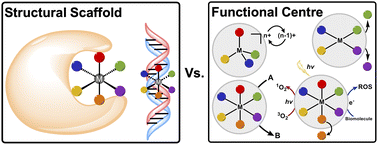
Metal complexes occupy a distinctive position in medicinal chemistry by combining well-defined three-dimensional structures with tuneable reactivity that cannot be readily achieved using purely organic compounds. This review examines metal-based therapeutics through a unifying conceptual framework that distinguishes between coordination complexes functioning primarily as inert structural scaffolds and those in which the metal centre serves as the dominant functional element. Scaffold-dominated complexes exploit kinetically stable coordination geometries to present ligands in rigid, stereochemically defined arrangements, enabling selective recognition of proteins and nucleic acids through shape complementarity and spatial control. In contrast, functional-centre-dominated complexes derive biological activity from metal-centred processes such as ligand exchange, redox cycling, catalysis, and photophysical activation, allowing dynamic and stimulus-responsive interactions with biological systems. The review highlights representative examples across both paradigms and emphasizes strategies that intentionally bridge structural stability with controlled activation at the target site. Emerging stimulus-responsive and multimodal approaches illustrate how metal complexes can be integrated into optimized therapeutic systems that align chemical reactivity with biological context and treatment modality. Collectively, this perspective underscores the unique structural and mechanistic space occupied by metal complexes in medicine and outlines design principles to guide the development of next-generation metallodrugs with improved selectivity, efficacy, and translational potential.
- This article is part of the themed collections: 2026 Chemical Science Perspective & Review Collection and 2026 Chemical Science HOT Article Collection
 Please wait while we load your content...


