


 PLATFORM UPDATE:


Enantioselective electrophilic α-fluorination catalyzed by an artificial metalloenzyme

Abstract
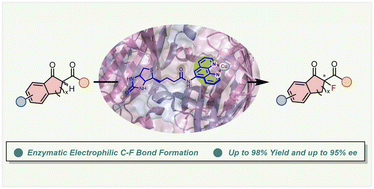
Fluorine incorporation profoundly influences the properties of pharmaceuticals and imaging agents, yet enzymatic C–F bond formation remains exceedingly rare. Here we report an enantioselective electrophilic α-fluorination catalyzed by an artificial metalloenzyme assembled from a biotinylated Cu(II) Lewis acid cofactor embedded in streptavidin. Targeted mutagenesis of residues S112 and K121 yielded variants delivering up to 95% ee. Substrate scope studies revealed distinct steric and electronic influences on both reactivity and selectivity. Docking and molecular dynamics simulations indicate that precise cofactor positioning and steric shielding from K121Q govern the approach of the electrophilic fluorinating reagent, accounting for the observed enantioselectivity. These findings demonstrate that electrophilic fluorination chemistry can be engineered into protein environments and highlight the broader potential of artificial metalloenzymes to enable new-to-nature biotransformations.
 Please wait while we load your content...


