


 PLATFORM UPDATE:

Atomic Ce sites promote a four-electron pathway of Pt as NADH oxidase mimics for in situ coenzyme regeneration
 c
Chengzhou
Zhu
*a
c
Chengzhou
Zhu
*a
Abstract
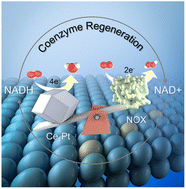
Nicotinamide adenine dinucleotide (NAD+) is a key coenzyme for human redox reactions, vital for cellular health and metabolic balance. Lots of NAD+-dependent redox enzymes, like alcohol dehydrogenase (ADH) and lactate dehydrogenase, can catalyze both forward and reverse reactions. However, substrate accumulation and inadequate NAD+ replenishment hinder forward reactions, disrupting the proper metabolism of these substrates. In this work, we reported atomic Ce-doped Pt (Ce1Pt) nanoparticles with abundant oxygen vacancy sites to boost NADH oxidase (NOX)-like activity for coenzyme regeneration. Mechanistic studies reveal that atomic Ce doping increases electron density of Pt and surface defects, enhancing O2 adsorption and accelerating the rate-limiting step. Furthermore, Ce1Pt employs a 4e− pathway for O2 reduction during NADH oxidation, minimizing toxic H2O2 byproducts and improving detection accuracy by reducing oxidative interference. Finally, Ce1Pt enables NAD+ regeneration and substrate metabolism, offering a promising strategy to counteract excessive alcohol intake or lactate accumulation. Through competitive adsorption between the reduced coenzyme NADH of ADH and chromogenic substrates, a microfluidic device integrated with immobilized Ce1Pt achieves blood alcohol detection with a low limit of detection of 0.012 mM.
 Please wait while we load your content...


