


 PLATFORM UPDATE:


Engineering a semi-artificial photosynthetic biofilm for robust and high-efficiency CO2-to-methane conversion

Abstract
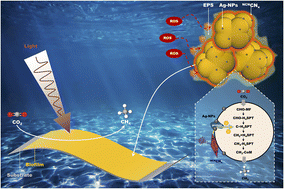
Hybrid semi-artificial photosynthetic systems, which integrate semiconductor nanomaterials with methanogens, offer an innovative strategy for the solar-driven conversion of CO2 to CH4 with high selectivity. However, these systems face challenges, including light harvesting losses, low quantum efficiency, and instability due to photodamage. To overcome the intrinsic limitations, we introduce a paradigm-shifting strategy: leveraging biofilms as a new platform for efficient solar-driven CO2-to-CH4 conversion. The strategic modification of carbon nitride promoted the self-assembly of stable biofilms. This process formed an integrated, cross-linked network comprising the material, cells, and extracellular polymeric substances, which remarkably improved light utilization efficiency compared to traditional suspension systems. Furthermore, the extracellular polymeric substance matrix served as a biocompatible shield, effectively quenching reactive oxygen species and suppressing photodamage to the cells. To further enhance efficiency, Methanosarcina barkeri was decorated with silver nanoparticles. This modification rewires the electron transfer pathway, promoting a ferredoxin-independent mechanism and significantly enhancing cellular electron uptake. We achieved a state-of-the-art performance with a record 1.92% quantum yield and 97.1% methane selectivity by suppressing photodamage. This study pioneers the paradigm of integrating biofilms within hybrid systems. By elucidating its advantages and potential applications, our work provides a foundational blueprint for engineering the hybrid-biofilm microenvironment and designing practically viable reactors.
- This article is part of the themed collection: 2026 Chemical Science Covers
 Please wait while we load your content...


