


 PLATFORM UPDATE:


Artificial recombinant high-density protein nanocarriers for precision drug delivery

Abstract
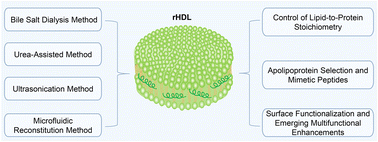
High-density lipoprotein (HDL) is a naturally occurring nanoparticle characterized by excellent biocompatibility and intrinsic receptor-mediated targeting capabilities. Consequently, recombinant high-density lipoprotein (rHDL) has emerged as a highly promising platform for precision drug delivery. This review focuses on the latest advancements in rHDL design, highlighting how key parameters-such as the stoichiometry of lipids to proteins, the engineering of apolipoproteins or mimetic peptides, and interfacial functionalization-govern the nanoparticle's structure, payload integration, and biological performance. We specifically demonstrate how these design principles enable the precise and tunable control of particle size, stability, and targeting efficiency across diverse therapeutic applications, including oncology, atherosclerosis, and neurodegenerative diseases. Compared to conventional nanocarriers, rHDL exhibits distinct advantages by virtue of its biomimetic properties and receptor-specific delivery pathways. In summary, these collective advancements establish rHDL as a “chemically programmable” nanoplatform, underscoring its immense potential to drive the development of targeted and multifunctional therapeutics.
- This article is part of the themed collection: 2026 Chemical Science Perspective & Review Collection
 Please wait while we load your content...


