


 PLATFORM UPDATE:


Dual-locked strategy for fluorescence/chemiluminescence dual-modal imaging reprogramming
 *a
*a
Abstract
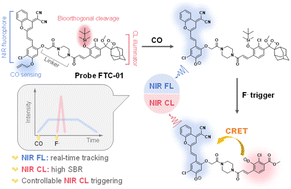
Fluorescence (FL) and chemiluminescence (CL) each offer unique advantages for molecular imaging. FL allows for continuous and real-time tracking of analytes, while CL provides an ultra-high signal-to-background ratio by eliminating the need for exogenous excitation light. Integrating these two modalities for imaging presents significant synergies as well as challenges. However, the rarely reported FL/CL dual-modal probes are typically limited to a “CL–FL” mode, in which both FL and CL signals are activated simultaneously, with the transient CL signals being captured instantly and processed preferentially. In this study, we designed a novel near-infrared FL/CL dual-modal probe that introduces an innovative “FL-trigger-CL” mode for imaging. This approach employs a dual-locked strategy, allowing for flexible and time-controlled triggering of the CRET-based redshift CL signal dependent on fluoride-ion-mediated desilylation, a biocompatible bioorthogonal chemistry. The probe, named FTC-01, was successfully applied to detect carbon monoxide, an endogenous inflammatory biomarker, in both cells and mice with colitis, incorporating FL for primary detection and CL for accurate in-depth detection. This advancement is expected to enhance the application of this dual-modal imaging logic in disease diagnosis and drug candidate screening. Furthermore, our dual-locked probe platform demonstrates excellent compatibility and the potential for expansion, facilitating the integration of a broader range of sensing units and guiding the rational design of dual-modal probes in the future.
 Please wait while we load your content...


