


 PLATFORM UPDATE:


Photocatalytic remote C(sp3)–H alkylation of long-chain alkenes: A tandem multicomponent approach via radical translocation†

Abstract
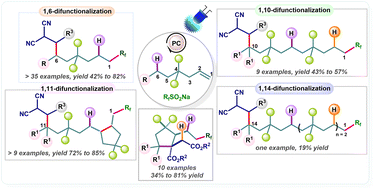
A breakthrough in organic synthesis has been accomplished by developing a redox-neutral, transition-metal-free tandem multicomponent reaction that combines perfluoroalkylation with the remote C(sp3)–H alkylation of terminal alkenes. This method exhibits exceptional chemo- and regioselectivity, leveraging organophotocatalysis under mild conditions. The versatility of this methodology is demonstrated through diverse 1,n-difunctionalized patterns (1, 6, 1, 7, 1, 11, and 1, 14) in unactivated alkenes through controlled radical translocation between secondary C(sp3)–carbon atoms, despite their similar bond dissociation energies (BDEs). Additionally, the study introduces a tandem multicomponent sequence encompassing the trifluoromethylation, 5-exo-trig cyclization, 1,5-radical translocation, and subsequent C(sp3)–H alkylation of 1,6-dialkenes to synthesize trans-1,2-disubstituted cyclopentanes. A key achievement of this work is the development of a multicomponent, transition-metal-free, tandem reaction for synthesizing highly substituted cyclopentane derivatives. This sequence involves two consecutive hydrogen atom transfer (HAT) processes: first, a 1,5-HAT from a secondary C(sp3)–carbon to a tertiary C(sp3)–carbon, followed by a 1,6-HAT from a vinylic carbon to a secondary carbon. This approach demonstrates excellent synthetic utility, as evidenced by its scalability and the facile conversion of the obtained products into diverse valuable functional groups, highlighting the broad applicability and potential of this innovative strategy.
- This article is part of the themed collection: 2026 Chemical Science HOT Article Collection
 Please wait while we load your content...


