


 PLATFORM UPDATE:


Near-infrared chemiluminescent probe for real-time monitoring of nitroreductase in tumors

Abstract
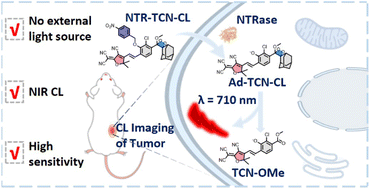
Nitroreductase (NTRase) is a hypoxia-associated enzyme that is commonly found in conditions such as inflammatory disorders, myocardial ischemia, and most solid tumors. Therefore, the real-time monitoring of its activity is important for the clinical diagnosis of these conditions. Compared with fluorescence imaging, chemiluminescence (CL) imaging does not require external excitation light, thus exhibiting lower autofluorescence and photobleaching and a higher signal-to-noise ratio (SNR). Herein, we report a near-infrared (NIR) CL probe, namely NTR-TCN-CL, for selective and sensitive detection of NTRase. The probe contains a p-nitrobenzyl trigger that can be enzymatically reduced by NTRase. The reduction subsequently uncages the CL scaffold, leading to the initiation of chemiexcitation that emits CL signals at ∼710 nm. The probe NTR-TCN-CL had high specificity and a limit of detection of 0.083 µg mL−1 and was successfully employed in imaging of NTRase in 4T1 tumor-bearing mice. The findings demonstrate the potential of the NTR-TCN-CL probe in real-time assessment of tumor-associated NTRase activity in the tumor microenvironment and highlight its utilizability as a noninvasive tool for monitoring of the hypoxia-related biomarker.
 Please wait while we load your content...


