


 PLATFORM UPDATE:


Macrocyclic geminal diols: synthesis, structures, stability and photophysical properties†

Abstract
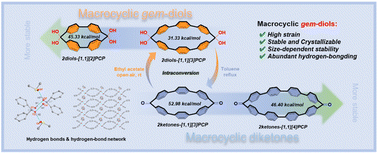
Geminal diols are generally unstable and prone to dehydration, yielding carbonyl compounds and making their isolation as discrete species highly challenging. Herein, we report the synthesis, structural characterization, and stability of a series of crystalline, stable, and rigid macrocyclic gem-diols obtained via acid hydrolysis of macrocyclic ketal precursors at −25 °C. Single-crystal X-ray diffraction analysis of these compounds reveals O–C–O bond angles of approximately 111°, along with extensive hydrogen-bonding networks that contribute to stabilizing the gem-diols. Thermogravimetric and hydrolytic analyses reveal a pronounced size-dependent stability trend. Theoretical calculations indicate that the enhanced stability of smaller gem-diol macrocycles stems from their ability to relieve substantial angle strain via sp3 hybridization at the methylene carbon, an effect that diminishes as ring size increases. Based on our experimental and computational results, the inner angle value of the macrocyclic ketone is proposed as a criterion for evaluating the relative stability of macrocyclic ketones versus their gem-diol forms. The photophysical properties of the macrocyclic geminal diols and macrocyclic diketones are also examined. This work broadens the scope of stable geminal diols and provides fundamental insights into their structure–stability relationships, thereby laying the groundwork for the strategic design and synthesis of structurally diverse macrocyclic geminal diols.
 Please wait while we load your content...


