


 PLATFORM UPDATE:


Spatially confined single-molecule folding achieves multicolor phosphorescence
 *a
*a
Abstract
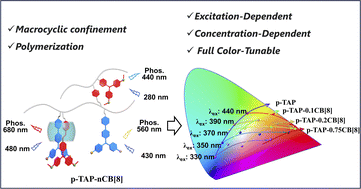
Possessing two ethylene units, guest triphenylamine derivatives are encapsulated by the cucurbit[8]uril (CB[8]) cavity to induce molecule folding to form a biaxial pseudorotaxane. Crucially, this structure facilitates the oriented polymerization of ethylene units exposed outside the cavity with acrylamide, producing a pure organic supramolecular polymer (p-TAPCB) that exhibits near-infrared (NIR) room-temperature phosphorescence (RTP) with a high quantum yield of 47.03% through the synergistic effect of macrocyclic confinement and polymerization. By adjusting the ratio of CB[8], the resulting copolymers show tunable phosphorescence color that changes depending on the excitation wavelength and concentration. Furthermore, phosphorescence resonance energy transfer (PRET) is employed in triphenylenylborate (TPE) donor-doped polymeric films to flexibly manipulate the NIR emission lifetime from 9.87 ms up to 1490 ms with a large Stokes shift (390 nm). With the advantages of variable emission color and on-demand lifetime, these materials have potential applications in dynamic information encryption.
 Please wait while we load your content...


