


 PLATFORM UPDATE:


Designing wide-spectrum-responsive cathode catalysts with abundant active sites for high-performance photo-enabled lithium–oxygen batteries via band engineering

Abstract
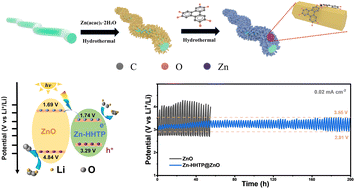
Aprotic lithium–oxygen batteries (LOBs) have been regarded as novel energy storage devices due to their excellent specific energy density, yet the large discharge/charge overpotentials remain a formidable obstacle to be overcome. A photoassisted battery has been verified as one of the most effective approaches to reduce the overpotentials of LOBs. Herein, ZnO nanorod arrays were in situ grown on carbon textile, followed by in situ transformation to form Zn-HHTP@ZnO (HHTP, hexahydroxytriphenylene) heterojunction photocatalysts. The porous structure and conjugated system of highly conductive Zn-HHTP provide efficient electron conduction pathways, compensating for the insufficient conductivity of ZnO. The nano-array structure enables multiple scattering and reflection of incident light within the array, enhancing photon utilization efficiency. The in situ grown Zn-HHTP@ZnO heterojunction composite not only possesses abundant active catalytic sites but also exhibits a broad light absorption range. Consequently, the assembled LOBs with Zn-HHTP@ZnO cathode deliver a low charging potential of 3.20 V under illumination and an excellent energy efficiency of 93.4%, which is significantly higher than that of 78% under dark conditions. Therefore, this paper provides a deeper understanding of the mechanism of photoexcited charge carriers in LOBs and will facilitate further exploration of light-involved energy storage systems.
 Please wait while we load your content...


