


 PLATFORM UPDATE:


Traceless linkers used for reversible protein–polymer conjugations

Abstract
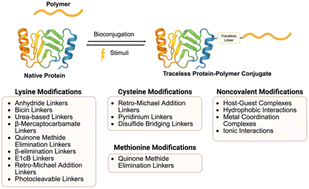
Proteins and peptides are an important class of biomolecules employed as therapeutics. Polymer conjugation to therapeutic proteins and peptides can improve their stability and circulation time, as well as reduce aggregation compared to the native biomolecule. However, the steric effect of a large polymer has the potential to drastically reduce or even completely inhibit the bioactivity of the protein. In these cases, traceless and reversible protein–polymer conjugation, in which native protein is released upon exposure to specific stimuli, can be utilized to both mitigate the undesirable effect of conjugation, while also taking advantage of the benefits prior to the cargo delivery. In this review, various linkers used in the reversible conjugations of polymers onto proteins are discussed.
- This article is part of the themed collections: 2026 Chemical Science Perspective & Review Collection and 15th anniversary: Chemical Science community collection
 Please wait while we load your content...


