


 PLATFORM UPDATE:


Simplifying the problem: metal salts can be active and controlled catalysts in polyester synthesis

Abstract
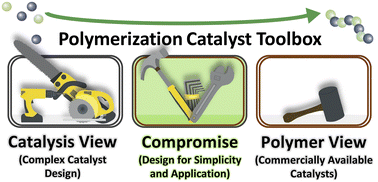
Polymers (plastics) have become essential for daily life due to their versatility, providing low-cost solutions for transportation, food packaging, healthcare, and more. However, the growing accumulation of plastic waste highlights the urgent need for more sustainable approaches to polymer production. While discrete metal catalysts have shown control over certain polymer properties, their complexities can often limit broader use and commercial scalability. This Perspective explores simple metal catalysts for the synthesis of polyesters, a promising alternative for non-degradable commercial plastics for their chemical recycling potential. Simple metal salts may offer advantages such as reduced toxicity, cost-effectiveness, simplicity, and in turn, accessibility for more efficient and upscaled polymer screening. Recent discoveries show that simple metal salts can achieve high activity and control, suggesting they may be competitive with more complex catalysts. By focusing on catalyst simplicity, it could help bridge the gap between catalyst development and polymer design for a more holistic approach towards producing sustainable polymers.
- This article is part of the themed collection: 2026 Chemical Science Perspective & Review Collection
 Please wait while we load your content...


