


 PLATFORM UPDATE:


Amyloidogenic oligomers derived from TDP-43 LCD promote the condensation and phosphorylation of TDP-43

Abstract
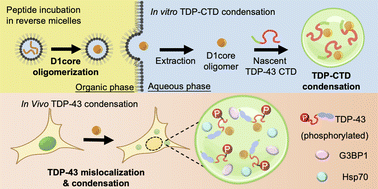
The aberrant aggregation of TAR DNA-binding protein 43 (TDP-43) is a hallmark of amyotrophic lateral sclerosis (ALS). While TDP-43 aggregation can occur via both classical amyloidogenesis and phase separation-mediated mechanisms, the role of amyloidogenic oligomers in modulating TDP-43 condensation remains unclear. Herein, we employ a reverse micelle method to prepare uniform oligomers derived from the low-complexity domain of TDP-43, termed D1core oligomers. These amyloidogenic oligomers are toxic, potently induce phase separation of recombinant TDP-43 C-terminal domains, and promote phosphorylation of cytosolic TDP-43 condensates in cells. Compared to monomeric or fibrillar forms, D1core oligomers uniquely enhance the condensation propensity of wild-type TDP-43 and further potentiate aggregation of the ALS-associated A315T mutant. Live-cell studies using fluorescence recovery after photobleaching reveal that oligomer-induced condensates are modulated by HSP70, which preserves their liquid-like properties. These findings provide new insights into the interplay between TDP-43 oligomers, phase separation, and aggregation, advancing our understanding of ALS-related proteinopathy.
 Please wait while we load your content...


