


 PLATFORM UPDATE:

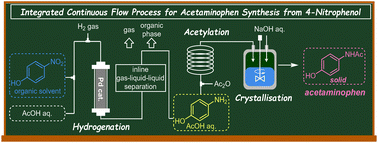
Integrated continuous-flow process for acetaminophen synthesis: hydrogenation of 4-nitrophenol, gas–liquid–liquid separation, acetylation, and crystallisation
 *a
Akira
Yada
a
*a
Akira
Yada
a
Abstract
We developed a continuous process for synthesising acetaminophen, an analgesic and antipyretic pharmaceutical, via flow hydrogenation of 4-nitrophenol, inline separation, flow acetylation, and crystallisation. Although continuous synthesis has been explored, existing processes face challenges related to catalyst handling, solvent use, and crystallisation integration. Scalable flow hydrogenation was achieved by simultaneously reducing 4-nitrophenol dissolved in an organic solvent and neutralizing it with aqueous acetic acid in a packed column containing bead-type Pd/AmberlystA21; Amberlyst A21 is a neutral ion-exchange resin. Following inline gas–liquid–liquid separation, acetylation was performed in a plug flow reactor, and subsequent crystallisation enabled the isolation of acetaminophen in crystalline form. The process achieved a productivity of 155.0 g h−1 and process mass intensity of 23.8, demonstrating its efficiency and scalability. This study aimed to develop a fully continuous, scalable route that integrates hydrogenation, acetylation, and crystallisation without requiring concentration steps. These findings demonstrate the feasibility of a safer, greener, and more scalable pathway for acetaminophen manufacturing.
 Please wait while we load your content...


