


 PLATFORM UPDATE:

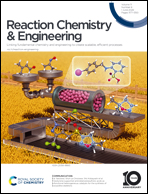
Continuous microreactor synthesis of size-controlled Ru nanoparticles to probe support and size effects in ammonia cracking

Abstract
Decoupling support and size effects and revealing size–activity relationships remain key challenges in the design and understanding of heterogeneous catalysts, especially for structurally sensitive reactions such as ammonia cracking for the on-demand production of hydrogen. This study demonstrates a new strategy to achieve both objectives where ruthenium nanoparticles (Ru NPs) with specific sizes are synthesised in the absence of capping ligands in a bespoke continuous 3D microreactor prior to their immobilisation on a range of supports. By keeping constant the average Ru NP size (∼2.5 nm), the study reveals the high activity of ceria and zirconia supports due to strong-metal support interaction-like behaviour, with ammonia cracking activities an order of magnitude higher than the Ru/carbon nanotubes benchmark catalyst. In addition, size–activity relationships of Ru NPs between 2.5 and 5.5 nm supported on nanostructured ceria corroborates the theoretical predictions of an increased activity as the particle size decreases within this range, associated to an increase in the density of ‘B5’ active sites on Ru NPs. This work demonstrates the potential of size-controlled wet synthesis of nanoparticles to reveal fundamental knowledge for the design and understanding of heterogeneous catalysts while simultaneously providing new routes for their manufacture.

- This article is part of the themed collections: Reaction Chemistry & Engineering Open Access Spotlight 2026 and Reaction Chemistry & Engineering 10th Anniversary Collection
 Please wait while we load your content...


