


 PLATFORM UPDATE:

Flexible graphene paper for large-scale electroorganic synthesis: C–H amination of benzoxazole derivatives

Abstract
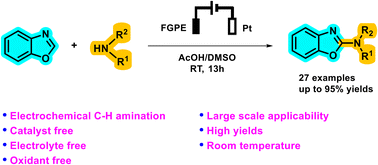
Large-scale synthesis of organic compounds using electrochemistry is an emerging, green, and sustainable approach, as it reduces the need for harsh chemicals, potentially lowers energy consumption, and minimizes waste. The C–H amination reactions are important because of the direct transformation of inert C–H bonds into more efficient and selective C–N bonds. This reaction also helps streamline synthetic routes by reducing the number of steps and the need for protecting groups. For large-scale electrochemical C–H amination reactions, the best way is to increase the electrode surface area. However, this approach is a big challenge with classical electrodes, e.g., glassy carbon electrode (GCE). New-type flexible, rollable, and durable electrodes are required to overcome this challenge. This work reports the production of a flexible graphene-based paper electrode (FGPE) using an economic mold-casting method for large-scale electrochemical C–H amination reactions of various benzoxazole derivatives. For the characterization of FGPEs and products of electroorganic synthesis, we have performed numerous advanced techniques. We have determined that C–H amination reactions occur with yields of at least 95% in 13 h by bending the FGPE. Large-scale electrochemical synthesis applications were applied using 5 times more electrode surface area of the FGPE, leveraging its flexibility and foldability. They exhibited a yield of 90% with a 16.7-fold increase in benzoxazole amount in the cell.
 Please wait while we load your content...


