


 PLATFORM UPDATE:


Integrated structural, vibrational, thermal, and optical characterization of a zinc-based organic–inorganic hybrid with DFT and molecular docking insights into its biological properties

Abstract
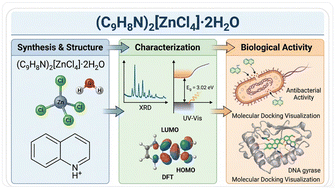
A novel zero-dimensional organic–inorganic hybrid material, (C9H8N)2[ZnCl4]·2H2O, was synthesized and investigated using structural, spectroscopic, thermal, optical, and biological approaches. Single-crystal X-ray diffraction reveals a monoclinic structure (C2/c) composed of isolated [ZnCl4]2− tetrahedra stabilized by quinolinium cations and lattice water molecules through hydrogen bonding and π–π interactions. Vibrational analyses (FTIR and Raman) confirm the structural features and indicate slight distortions of the ZnCl42− units. Thermal studies show a multistep decomposition involving dehydration followed by organic framework degradation. Optical investigations based on diffuse reflectance spectroscopy reveal an indirect band gap (Eg ≈ 3.02 eV), with electronic transitions dominated by π → π* and ligand-to-metal charge transfer processes. Density Functional Theory (DFT) calculations at the B3LYP/6-31G(d) level confirm the electronic stability of the complex, exhibiting a moderate energy gap consistent with its semiconducting behavior. In silico ADME analysis suggests acceptable drug-likeness, high gastrointestinal absorption, and favorable pharmacokinetic characteristics. Molecular docking studies toward DNA gyrase and LasR proteins reveal moderate binding affinities relative to Ciprofloxacin, supporting the experimentally observed antibacterial activity. Furthermore, the compound exhibits significant antibacterial and antibiofilm activities against both Gram-positive and Gram-negative bacteria. These findings highlight the multifunctional character of this zinc-based hybrid material, combining structural stability, semiconducting behavior, and promising biological activity.
 Please wait while we load your content...


