


 PLATFORM UPDATE:


Facile synthesis of (4-phenylthiophen-2-yl)methyl 1-naphthoates via Suzuki–Miyaura cross-coupling: anti-seizure evaluation through molecular docking, EEG analysis, and ADMET profiling

Abstract
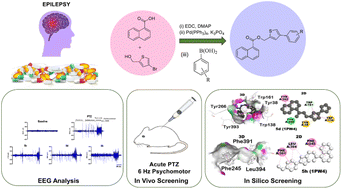
This study focused on the synthesis of a novel series of (4-bromothiophen-2-yl)methyl 1-naphthoate derivatives (5a–5h) via the Suzuki–Miyaura cross-coupling with moderate to excellent yields. Acute pentylenetetrazol (PTZ) and 6 Hz psychomotor seizure models were used to investigate in vivo anticonvulsant effects. The 5b, 5d, and 5h showed significant outcomes concerning mortality, protection, and seizure severity. In addition, the goal of the current study was to use a multifaceted strategy that integrates molecular docking (AutoDock Vina), in silico ADMET (SwissADME, Molsoft), and network pharmacology to explore their potential as anti-epileptic drugs against important targets (GABAA receptor (8G5G), SV2A (3O7P, 1PW4)). To find common targets, we built PPI networks and carried out functional enrichment analysis. As compared to standard medications (levetiracetam, diazepam, and PTZ), all compounds (5a–5h) showed greater binding affinities (−7.6 to −9.7 kcal mol−1). ADMET profiles revealed drug-like characteristics with good bioavailability scores (0.55), but they also highlighted P-gp substrate liabilities and low solubility as important improvement considerations. Molsoft web server highlighted their good BBB permeation. By focusing on hub genes (SRC, AKT1, MAPK1/3, STAT3, EGFR) implicated in key signaling pathways such as PI3K-Akt, MAPK, JAK-STAT, and GABAergic synapse signaling, network analysis showed that these drugs had 15–25 targets in common with epilepsy.
 Please wait while we load your content...


