


 PLATFORM UPDATE:


Design, synthesis and bioactivity of indobufen derivatives
 *b
and
*b
and
Abstract
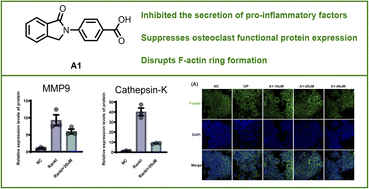
Osteoporosis is characterized by excessive osteoclast-mediated bone resorption, a process that can be amplified by inflammatory cues within the bone microenvironment. Targeting the inflammation–osteoclast axis has therefore emerged as a promising strategy for preventing pathological bone loss. Here, a series of indobufen-modified derivatives were rationally designed and synthesized, and their biological activities were evaluated through a stepwise in vitro screening workflow. Early inflammatory profiling in fibroblast-like synoviocytes (FLS) identified compound A1 as a lead candidate with pronounced suppression of pro-inflammatory mediators and matrix-degrading enzymes. In a RANKL-induced RAW264.7 osteoclastogenesis model, A1 inhibited osteoclast maturation at non-cytotoxic concentrations, markedly reducing the expression of osteoclast functional proteins (MMP9 and cathepsin K) and disrupting F-actin ring formation and multinucleation. Collectively, these findings demonstrate that indobufen scaffold modification can yield small molecules with dual anti-inflammatory and anti-osteoclastogenic activities and highlight A1 as a promising lead compound for the development of therapeutics targeting osteoporosis and inflammation-associated bone loss.
 Please wait while we load your content...


