


 PLATFORM UPDATE:


One-pot fabrication of a novel urchin-like Fe3O4/α-FeOOH/Al(OH)3 magnetic nanocomposite for phosphate removal and recovery: adsorption performance and mechanism
 *ab
*ab
Abstract
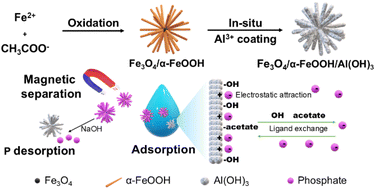
Driven by the dual crises of global phosphorus depletion and severe aquatic eutrophication, developing sustainable technologies for phosphorus recovery is of paramount importance. Herein, we report a facile one-pot synthesis of a novel magnetic adsorbent Fe3O4/α-FeOOH/Al(OH)3 (MGA) nanocomposite, wherein amorphous aluminum hydroxide is uniformly coated onto an urchin-like magnetite/goethite carrier. Systematic optimization of the Al(OH)3 loading demonstrated that the optimal composite delivered a maximum phosphate adsorption capacity of 94.9 mg-P g−1 with a partition coefficient of 0.53 mg g−1 µM−1 at pH 7.0. MGA exhibited favorable adsorption performance across a pH range from 6.0 to 10.0, and was virtually unaffected by ubiquitous competing anions (Cl−, NO3−, SO42−, HCO3−, and CH3COO−). Comparative spectroscopic investigations (XPS and FTIR) of the pristine and spent materials elucidated that this exceptional affinity primarily stems from a combination of electrostatic attractions and ligand exchange, leading to the formation of inner-sphere complexes. Desorption tests revealed that MGA sustained a competitive adsorption capacity over five regeneration cycles. Overall, MGA represents an economically viable and highly efficient candidate for the remediation of phosphorus-polluted waters and subsequent resource recovery.
 Please wait while we load your content...


