


 PLATFORM UPDATE:


Nanoflower-shaped cobalt-metal–organic framework as an oxidase-like nanozyme and 1,2-diaminobenzene as a catalytic substrate for the innovative signal “off-on” aptamer sensing of prostate-specific antigen
 †a
Mingqing
Huang
*b
†a
Mingqing
Huang
*b
Abstract
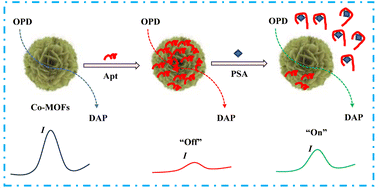
The development of simple, sensitive, and reliable methods for detecting prostate-specific antigen (PSA) holds significant importance for the early screening and diagnosis of prostate cancer. In this work, a novel signal “off-on” electrochemical aptamer (Apt) sensing platform was constructed for the first time to detect PSA, utilizing a synthesized nanoflower-shaped three-dimensional cobalt-metal–organic framework (Co-MOF) as an oxidase-mimicking nanozyme and employing 1,2-diaminobenzene as the catalytic substrate. In this design, the Co-MOF nanozyme can directly catalyze the oxidation of 1,2-diaminobenzene to generate diaminophenazine (DAP), an electroactive substance, without the need for H2O2. However, when the prepared Co-MOF nanozyme binds to PSA-specific aptamers, its enzyme-like activity becomes inhibited due to the blockage of active sites by the aptamer, leading to the disappearance of the DAP current that corresponds to the signal “off” state. Notably, in the presence of PSA, the catalytic activity of the Co-MOF is restored as the specific binding between Apt and PSA causes Apt to detach from the Co-MOF surface, resulting in the recovery of the DAP current and switching the signal to the “on” state. After the optimization of key experimental parameters, the proposed “off-on” nanozyme-based electrochemical aptasensor demonstrates excellent PSA detection performance. Moreover, this platform may provide a novel, simple, and reliable strategy for detecting a wide range of biomarkers by simply replacing the corresponding aptamer.
 Please wait while we load your content...


