


 PLATFORM UPDATE:


Deep learning mechanism and its application in biomacromolecules
 *b
*b
Abstract
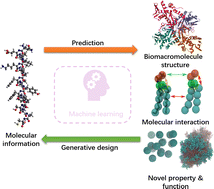
Biomacromolecules are pivotal to the advancement of designing functional systems for biomedical and biomaterial applications. Artificial intelligence (AI), especially deep neural networks, is revolutionizing these domains, driving the transition from predictive to generative design. This review surveys the mechanisms and performance of these cutting-edge structure-predicting deep-learning models and their generative counterparts used for the de novo design of biomacromolecules. AI tools can also be used to predict self-assembly behavior, design high-affinity binders, and pave the way for novel structures with customized functions. This review concludes with a discussion on the current advantages, long-term barriers, and exciting directions for future exploration. AI is shifting discovery from a slow, trial-and-error process to a rapid, strategic, data-driven paradigm, redefining the search for new biological and material concepts as a targeted endeavor.
 Please wait while we load your content...


