


 PLATFORM UPDATE:


One-pot synthesis of Au/GO nanozymes: enhanced catalytic activity via in situ chemical reduction
 c
and
Ola G.
Hussein
*d
c
and
Ola G.
Hussein
*d
Abstract
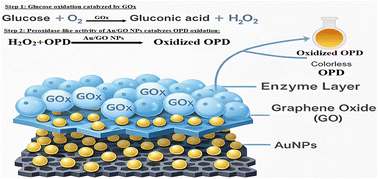
Synthetic nanozyme materials are engineered to mimic the catalytic activities of naturally occurring enzymes making them highly appealing because they are more stable, cheaper to produce, and offer easily customizable catalytic characteristics compared with the enzyme systems found in nature. In this work, we present the fabrication of a gold nanoparticle-decorated graphene oxide (Au/GO) nanocomposite using an in situ chemical reduction method. Graphene oxide served as a high-surface-area scaffold enabling the uniform anchoring of gold nanoparticles while sodium borohydride facilitated efficient reduction of HAuCl4 to Au0. Comprehensive characterization using SEM, TEM, EDX, and FT-IR and UV-vis spectroscopies verified the successful synthesis of the well-dispersed heteroatom-enriched nanocomposite with well-defined porosity and favorable optical attributes. Au/GO-NPs demonstrated significant peroxidase-like catalytic behavior by efficiently promoting the colorimetric oxidation of o-phenylenediamine (OPD) in the presence of hydrogen peroxide achieving a wide linear detection range (5–700 µM) and a low detection limit of 4.03 µM. Coupled with the glucose oxidase (GOx) system, Au/GO-NPs effectively detected glucose through the in situ generation of hydrogen peroxide providing consistent measurements within the range of 50–700 µM. Kinetic evaluation yielded a Michaelis constant (Km) of 0.589 mM and a maximum reaction rate (Vmax) of 1.19 × 10⁻³ µM/min reflecting efficient enzyme-mimicking activity of the system. The Au/GO-NP-based colorimetric glucose sensor displayed excellent selectivity against common interfering substances and outstanding reproducibility (RSD <1.5%). These findings highlight the potential of Au/GO-NPs as a cost-effective and highly sensitive nanozyme platform for colorimetric biosensing particularly for the detection of hydrogen peroxide and glucose.
 Please wait while we load your content...


