


 PLATFORM UPDATE:


Genipin-crosslinked CeO2-incorporating Janus patch for oral ulcer treatment

Abstract
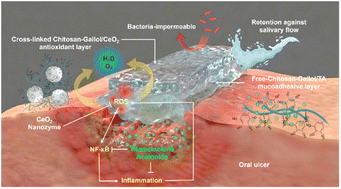
Oral ulcers and mucositis are difficult to manage clinically due to the persistently wet oral environment, continuous mechanical stress, and the complex inflammatory and oxidative microenvironment at lesion sites. Conventional topical therapies, including corticosteroid gels, often suffer from poor mucosal retention and limited therapeutic durability. Here, we report a dual-layered Janus oral patch that integrates wet-tissue adhesion, localized corticosteroid delivery, and genipin-crosslinked CeO2 nanozyme-mediated redox regulation for effective oral ulcer treatment. The patch comprises a tissue-facing adhesive layer of gallic acid-conjugated chitosan (CHI-G) loaded with triamcinolone acetonide, and an opposing, non-adhesive outer layer in which CeO2 nanozymes are immobilized within a genipin-crosslinked CHI-G network. This spatially organized architecture enables stable mucosal fixation while minimizing nonspecific adhesion and nanoparticle leaching. The Janus patch exhibited strong adhesion to wet oral mucosa, resistance to salivary shear flow, and effective barrier function against bacterial penetration. In vitro and in vivo biosafety assessments confirmed excellent biocompatibility and the absence of systemic cerium accumulation. In a mouse oral ulcer model, the dual-layered Janus patch significantly accelerated wound closure compared to untreated and conventional corticosteroid gel-treated controls. Histological and immunohistochemical analyses revealed enhanced re-epithelialization, reduced inflammatory cell infiltration, and significant reduction of oxidative stress at the ulcer site. Collectively, genipin-stabilized CeO2 nanozyme-integrated Janus patch design provides a robust and localized therapeutic strategy for oral ulcers, offering a clinically relevant platform that overcomes key limitations of conventional treatments.
 Please wait while we load your content...


