


 PLATFORM UPDATE:


Morpholine as a privileged scaffold for neurodegenerative disease therapeutics
 b
Bijo
Mathew
*a
b
Bijo
Mathew
*a
Abstract
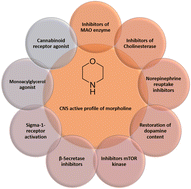
Morpholine, a six-membered heterocyclic ring containing oxygen and nitrogen, is increasingly recognized in medicinal chemistry for its diverse pharmacological properties. Morpholine derivatives have shown promise as enzyme inhibitors, neurotransmitter modulators, and receptor agonists, making them candidates for treating neurodegenerative and neuropsychiatric disorders. The importance of this study lies in elucidating the therapeutic significance of morpholine in central nervous system (CNS) drug development, particularly in its role in inhibiting monoamine oxidases (MAO-A and MAO-B) and cholinesterases (AChE and BChE) and targeting the norepinephrine and dopamine pathways. Systematic searches of peer-reviewed literature were conducted to evaluate the structural significance and pharmacological potential of morpholine-based compounds. The findings reveal that morpholine derivatives exhibit promising efficacy and selectivity, often outperforming conventional drugs in specific contexts. These discoveries point to the possibility of morpholine as a valuable scaffold in CNS drug discovery due to its balanced lipophilic–hydrophilic profile and enhanced blood–brain barrier permeability. The implications of these findings are significant, and they call for future research to focus on optimizing morpholine derivatives to improve selectivity, efficacy, and safety, thereby expanding their therapeutic potential in CNS applications. Overall, this study emphasizes the importance of morpholine derivatives in advancing CNS therapeutics and their potential role in addressing unmet medical needs in neuropsychiatric disorder treatments.
 Please wait while we load your content...


