


 PLATFORM UPDATE:


Effect of oxygenated ferrocene derivatives on soot formation and nanoparticle emissions in n-heptane diffusion flames

Abstract
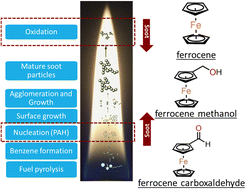
This study reports an experimental investigation of soot formation in laminar diffusion flames of n-heptane doped with organometallic additives, including ferrocene, ferrocene methanol, and ferrocene carboxaldehyde, at concentrations of 100 and 500 ppm. Measurements of flame temperature, flame Soot Volume Fraction (SVF), and aerosol concentration in the flame plume were obtained. The addition of organometallics lowered the SVF compared to pure n-heptane. The oxygenated ferrocene derivatives were found to be significantly more effective at suppressing soot compared to pure ferrocene. At 100 ppm, ferrocene methanol and ferrocene carboxaldehyde reduced peak SVF by 24% and 22%, compared to only 8% for ferrocene. Increasing the concentration to 500 ppm provided only a marginal additional improvement. However, the measurements of aerosol concentration in the flame plume showed ultrafine particulate emissions for additive-doped flames. These emissions were attributed to iron-containing nanoparticles. Total Number Concentration (TNC) of particulate emissions was comparable for ferrocene and ferrocene carboxaldehyde, while ferrocene methanol showed a marginally lower value. The study demonstrates that organometallic additives reduce soot concentration within the flame while increasing nanoparticle emissions. This highlights a trade-off between soot suppression and nanoparticle emissions in the context of the selection and use of such additives. Furthermore, the study highlights the advantage of combined diagnostics, including aerosol measurement, over simple in-flame soot measurement to assess the overall emissions.
 Please wait while we load your content...


