


 PLATFORM UPDATE:


Efficient aqueous solubilization of methylxanthines via complexation with natural polyphenolate salts
 ab
ab
Abstract
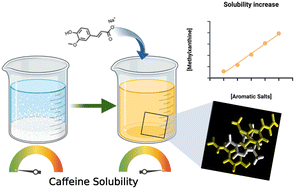
Caffeine, theophylline and theobromine are methylxanthines, a class of alkaloids present in coffee, tea and cocoa and therefore widely consumed all around the world. They exhibit several biological properties making them useful ingredients in cosmetics, as food additives or in pharmaceutical formulations. However, their solubility in water is limited. Extraction and purification often require the use of petrochemical volatile organic solvents. In the present paper, the solubility in water of caffeine, theophylline and theobromine in the presence of various natural solubilizing agents is reported. Niacinamide, as well as sodium or cholinium levulinate, salicylate, ferulate or caffeate were used to enhance the solubility of these methylxanthines in water. For example, solubility of theobromine was found to increase by a factor of 300 in aqueous solutions of ferulate salt. Solubilization mechanisms were investigated experimentally using 1H NMR and 2D ROESY-NMR and theoretically using molecular dynamics simulations. Both studies point towards the presence of π-stacking-type interactions between methylxanthines and solubilizing compounds. Benzene-based moieties exhibit stronger interactions and π-stacking with caffeine than pyridine-based moieties, such as nicotinic acid and niacinamide. These compounds can therefore be considered as complexing agents for methylxanthines rather than hydrotropes. Importantly, the linear dependence of solubility on solubilizing agent concentration indicates that these complexes maintain their solubilized state upon dilution, thereby enabling complete miscibility in water without precipitation.
 Please wait while we load your content...


