


 PLATFORM UPDATE:


Multi-objective optimization design of microchannel reactors for Fischer–Tropsch synthesis using CFD, GENN, and NSGA-II
 a
and
a
and
Abstract
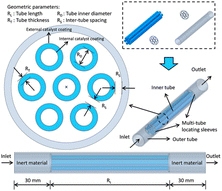
In Fischer–Tropsch synthesis processes, microchannel reactors exhibit pronounced process intensification compared with conventional fixed-bed reactors. Computational fluid dynamics was coupled with a surrogate model based on a gradient-enhanced neural network to systematically evaluate the influence of four characteristic geometric variables on the catalytic performance of multi-tubular microchannel reactors. A multi-objective optimization aimed at maximizing C5+ yield and concurrently minimizing the maximum temperature rise was then conducted using the non-dominated sorting genetic algorithm-II. The resulting Pareto frontier was analyzed to identify the solutions that optimally reconcile thermal safety and productivity. The results indicate that, relative to the initial design, the selected optimal configuration reduces ΔTmax by 7.2 °C and increases YC5+ by a factor of 1.86, substantially enhancing reactor performance and providing both a theoretical basis and design reference for pilot-scale demonstration and industrial deployment of Fischer–Tropsch microchannel reactors.
 Please wait while we load your content...


