


 PLATFORM UPDATE:


Enhanced environmental remediation through hybrid adsorption-photocatalysis using ZnO/TiO2-CaAlg composite catalysts

Abstract
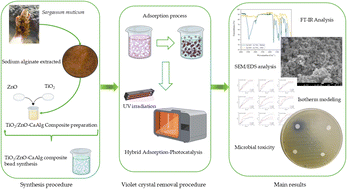
Due to the toxic, carcinogenic, and environmentally persistent nature of dyes such as crystal violet, water pollution resulting from industrial dye discharges has become a critical global environmental issue. This study investigates a hybrid approach to address water pollution by integrating adsorption and advanced oxidation processes (AOPs) using ZnO/TiO2-CaAlg as a catalyst. Sodium alginate, a naturally occurring biopolymer, was employed as the support matrix for the catalyst, taking advantage of its hydrophilic nature, biocompatibility, and ability to form strong electrostatic interactions with cationic dyes. Key parameters such as dye concentration, catalyst dosage, hydrogen peroxide volume, and solution pH were optimized to maximize degradation efficiency. Both individual and combined processes were evaluated to assess the synergistic effects on dye removal. The stability and reusability of the catalyst were evaluated, demonstrating its potential as a scalable and environmentally sustainable solution for wastewater treatment. The findings underscore the potential of ZnO/TiO2-CaAlg catalysts in mitigating persistent organic pollutants, contributing to the development of advanced treatment methods for environmental remediation.
 Please wait while we load your content...


