


 PLATFORM UPDATE:


Copper tungstate-assisted photocatalytic degradation of industrial products (dyes and pharmaceuticals) in water

Abstract
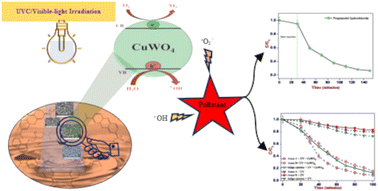
The contamination of ecosystems, specifically aquatic ecosystems, has emerged as a substantial concern in recent decades. This is mostly owing to the extensive growth of large industries that not only promote societal advancements but also impose adverse effects on the environment. Azure A (AA) and Azure B (AB) are the cationic dyes commonly employed in industrial and biomedical fields as intermediates in the production of several pharmaceuticals and as mediators for electrochemical biosensing, and indigo carmine (IC) is an anionic dye used in the textile industry for dyeing. Micropollutants such as pharmaceuticals, propranolol hydrochloride (β-blocker) (PPH) are the pollutants in the subject of discussion. In this research, the efficient degradation of AA (91%), AB (84.6%), IC (87.3%) and PPH (>80%) by the CuWO4 photocatalyst is highlighted. Both the dye and drug degradations followed pseudo-first order kinetics. CuWO4 catalyst is used to alleviate the impact of the environment on its ecosystem as a photocatalyst with ultraviolet (UV) irradiation of pollutants (AA, AB, and PPH). For the analysis of pollutant decomposition, UV-visible absorption spectroscopy and high-performance liquid chromatography (HPLC) are employed. This study highlights the potential of nanomaterial-based photocatalysis as a viable and effective method for sustainably mitigating water pollution.
 Please wait while we load your content...


