


 PLATFORM UPDATE:


Covalent organic imine polymer containing benzothiadiazole as a bifunctional material for specific fluorescence detection and removal of Hg2+

Abstract
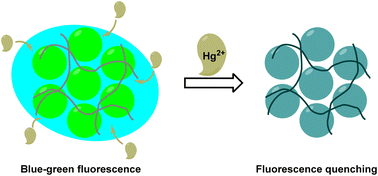
As one of the most toxic heavy metals to humans and the environment, achieving simultaneous fluorescence detection and effective removal of Hg2+ presents a significant challenge. In this study, we combined the excellent photoelectric properties of benzothiadiazole groups with the porous structure of covalent organic polymers (COPs) to develop a novel covalent organic polymer material (BTD-MPD-COP) with enhanced fluorescence performance. The benzothiadiazole-modified sites in this material achieved the bifunctional application of BTD-MPD-COP for Hg2+ fluorescence detection with a detection limit of 35.65 µM and simultaneous removal with a capacity of 475 mg g−1. Furthermore, BTD-MPD-COP demonstrated remarkable Hg2+ selectivity and can be reused after desorption without significant reduction in its adsorption capacity. This indicates that BTD-MPD-COP possesses excellent dynamic reversibility in the adsorption of Hg2+. In summary, the development of functionalized bifunctional covalent organic polymer materials presents an effective strategy for simultaneous removal and detection of toxic heavy metal ions.
 Please wait while we load your content...


