


 PLATFORM UPDATE:


Multimodal investigation of dacomitinib–calf thymus DNA binding interaction: insights from spectroscopy, thermodynamics, and in-silico studies

Abstract
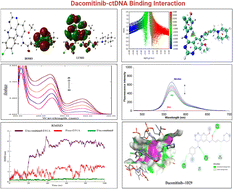
Dacomitinib is a second-generation tyrosine kinase inhibitor (TKI) used as a first-line targeted therapy for patients with metastatic non-small cell lung cancer. In this study, its interaction with calf thymus DNA (ctDNA) was systematically investigated using UV-Vis spectrophotometry, spectrofluorimetry, viscosity measurements, ionic strength variation, thermodynamic analysis, molecular docking, and molecular dynamics (MD) simulations. The results revealed a strong binding affinity between dacomitinib and ctDNA, with a preferential minor groove-binding mode confirmed through competitive displacement assays using ethidium bromide and rhodamine B, and further supported by UV-Vis and viscosity data. The binding constant (Kb) at 298 K, calculated using the Benesi–Hildebrand equation, was 7.7 × 10⁵ M−1, indicating high affinity. Thermodynamic parameters (ΔH° and ΔS°) indicated that the interaction is primarily governed by van der Waals forces and hydrogen bonding. Frontier molecular orbital (HOMO/LUMO) analysis of dacomitinib showed a wide energy gap, reflecting a favorable tendency for biomolecular interaction. Molecular electrostatic potential (MEP) mapping identified electrophilic and nucleophilic regions and predicted preferential non-covalent interaction sites. Non-Covalent Interaction (NCI) analysis revealed a compact network of van der Waals contacts with minor steric repulsion, supporting conformational stability. Molecular docking confirmed strong, directional, non-covalent affinity toward the DNA minor groove. MD simulations over 100 ns demonstrated structural stability of the dacomitinib–ctDNA complex through stable RMSD, reduced RMSF, compact radius of gyration, and persistent hydrogen bonding. This study provides an integrated experimental and computational analysis of the interaction between dacomitinib and ctDNA, elucidating a non-intercalative minor groove binding mode and offering mechanistic insight into how a targeted kinase inhibitor can engage DNA through shape complementarity, hydrogen bonding, and van der Waals interactions. The observed interaction reflects a binding interaction under in vitro conditions and is not intended to imply a direct role in the established anticancer mechanism of dacomitinib. Beyond characterizing a specific drug–DNA system, these findings highlight general principles governing minor groove recognition by non-classical DNA-binding small molecules and underscore the importance of evaluating potential off-target nucleic acid interactions of targeted therapeutics.
 Please wait while we load your content...


